
Vernal is a small town of just over ten thousand people. But dinosaurs are literally on every corner — plastic, cardboard, on rooftops, at gas stations, and along the roads. All because twenty miles to the east, almost on the Colorado border, stretches a national monument with the fitting name Dinosaur National Monument.
That’s exactly where we headed for the Labor Day weekend.
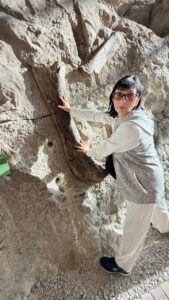
From the visitor center, small shuttle cars carried us to the monument’s main attraction — a massive rock face preserving hundreds of dinosaur bones, skillfully incorporated into a modern museum building. Visitors are allowed to touch the fossilized bones, which I did immediately.
So many bones and remains lie here that over the past hundred years paleontologists have excavated the skeletons of more than a dozen dinosaurs and sent them to natural history museums across the country, including the Smithsonian Institution and the University of Utah.
Two questions nagged at me: why here, and why did they die?
First answer: roughly 150 million years ago, this place was warm, humid, and perfectly comfortable. Dinosaurs lived the good life — drinking from the river, grazing on vegetation, or, depending on their culinary preferences, on each other.
The second answer proved far less cheerful. A drought arrived and the river dried up. Dinosaurs had relatively small heads, and so, as the guides joke, strategic planning was not their strong suit. Instead of migrating in search of water, many animals stayed near the dry riverbed waiting for better times. But the water never returned. The dinosaurs died of thirst. Eventually the river filled again, but there was no one left to drink from it. The current mixed bones with silt and sand, and over millions of years everything turned to stone.
In case you weren’t aware — many people still believe that oil and gas formed from dinosaur remains. In fact, ancient microorganisms and plants played the primary role. The Vernal dinosaurs met a different fate: their remains are carefully excavated, cleaned, studied, and restored for museums.
The mass extinction of dinosaurs occurred roughly 80 million years after the events that created this bone graveyard. Scientists still debate the details, but the most widely accepted theory involves a large asteroid impact that altered the planet’s climate. My all-knowing husband says: “A comet.” I believe him.
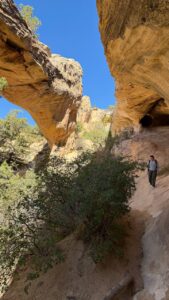
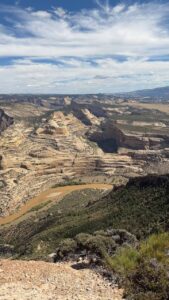
Beyond the monument itself, we visited several scenic spots, went hiking, had picnics, enjoyed the nature, and rested far from the noise of the city.
A proper reset, all in all.
My restless writer’s brain has already spun a whole web of stories. My husband keeps asking whether I’ll write about dinosaurs in love or about a little dinosaur who got lost and is trying to find his way home. But I want to tell an entirely different story.
In one spot we came across the homestead of a remarkable woman — Josie Bassett. For more than fifty years she lived far from people, kept livestock, grew vegetables, and rode on horseback. She died at eighty-nine after breaking her leg.
But that’s not even the most interesting part.
She knew members of the Wild Bunch gang, including Butch Cassidy and the Sundance Kid themselves. By some accounts, she was married to several of the gang’s members. She was an exceptional rifle shot, owned her own horse herds and cattle. Whether she took part in train robberies, I cannot say, but her life was clearly far more interesting than that of most modern bloggers.
Now there’s a character.
I think I already know who my next story will be about.